
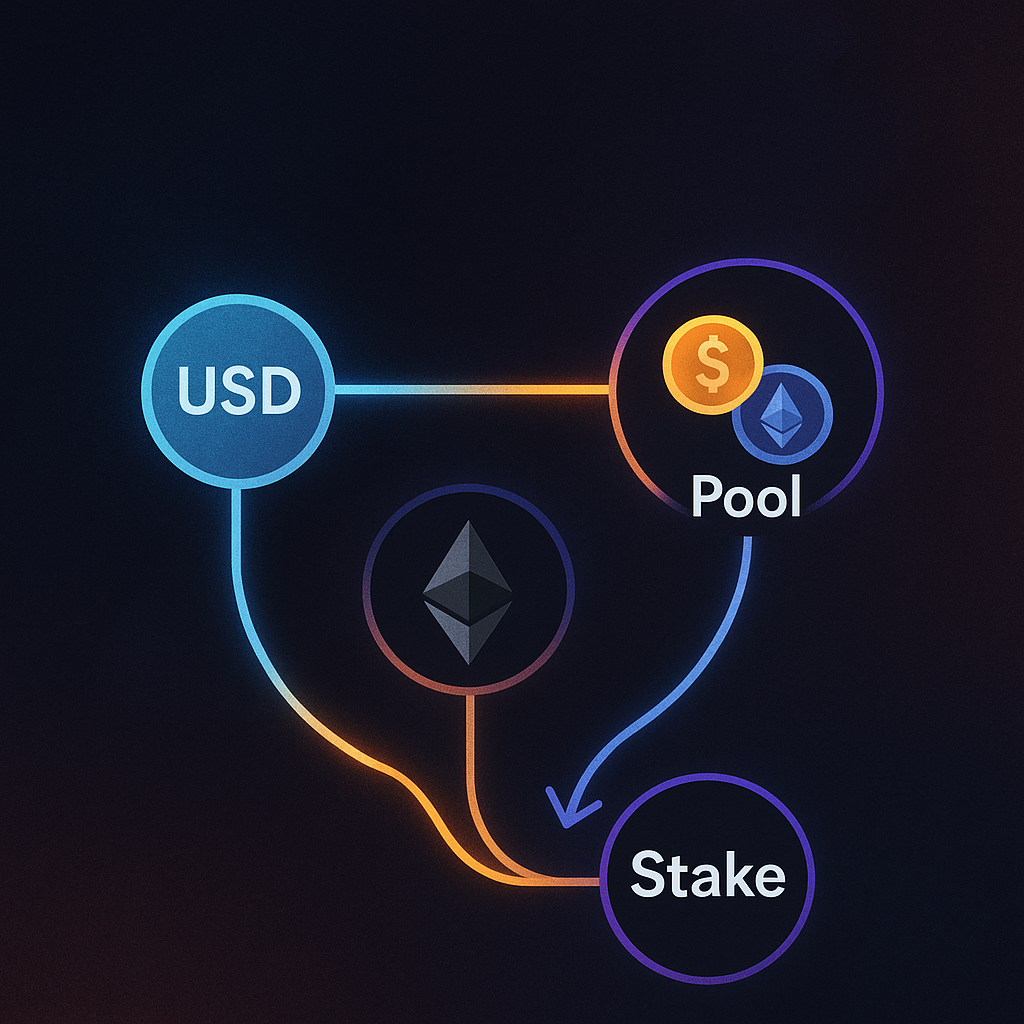
Here’s a straightforward, no-fluff walkthrough of what I learned — and what I wish I had known before I started.


๐Ÿ”‹ Getting Started: The Right Way

1. Start with stablecoins like USD or USDT.
Begin by depositing stablecoins into your Coinbase Wallet. They’re easy to manage, and most pools on Balancer accept them.

2. Immediately convert a small portion to ETH.
Always keep $50–$100 worth of ETH in your wallet for gas fees. Without ETH, you won’t be able to make any transactions on the Ethereum network.


๐Ÿงฎ Strategy: How to Pick and Enter a Pool

3. Look for high-yield pools on Balancer.
Do your homework. Check APR, liquidity, and whether the pool is incentivized (gauge-enabled). Pools with Aura support offer higher yield potential.

4. Swap for the tokens in the pool.
Once you decide on a pool, swap your stablecoins for the required tokens in the correct ratio (typically 50/50). Be mindful of slippage and routing fees.

5. Add liquidity via Balancer.
Use Balancer’s platform to supply your tokens to the pool. This step gives you Balancer Pool Tokens (BPT).

6. Stake BPT on Aura Finance.
Don’t stake on Balancer. Instead, head to Aura, find your pool, and stake the BPT tokens there. Aura gives you boosted yields in BAL and AURA tokens, plus optional auto-compounding.


๐ŸŽˆ The Payoff: What I Learned

7. Avoid unnecessary swaps.
I burned a lot of ETH converting back and forth between coins. Now I know: choose your pool first, plan your token purchases, and minimize conversions.

8. Aura’s auto-compound is a game-changer.
Once you stake your BPT in Aura, you can enable auto-compounding. It re-stakes your rewards automatically, saving time and gas.

9. Patience pays.
Don’t rush to claim rewards daily. Gas fees can eat up small earnings. Let them accumulate or set a weekly schedule.


๐Ÿงน Final Thoughts

DeFi is powerful but unforgiving if you move too fast without a plan. The best approach is to start small, track everything, and automate where you can. Today, I’m farming both stablecoins and ETH staking assets with low maintenance and high yield.

If you’re just getting started: follow the steps above and avoid my early mistakes. You’ll be yield farming like a pro in no time.Want a checklist or video walkthrough version of this guide? Drop me a message — I’d love to share it.

Stay curious, stay compounding.



By jfbertrand April 14, 2026
Facing a slow quarter can feel personal — like every unpaid invoice and empty morning shift is a direct hit to the dream you’ve built. If you’ve been juggling payroll, inventory, and marketing with too little runway, you’re not alone. Practical choices and a clear plan can turn that pressure into momentum.
By jfbertrand April 11, 2026
Running short on cash can feel like trying to steer a truck with a flat tire — you can still move forward, but every turn is risky and slow. If you’re juggling payroll, inventory, or a big seasonal order, you’re not alone. The good news is there are practical ways to bridge gaps without handing your business over to risky terms or surprises.
By jfbertrand April 9, 2026
Running a small business often feels like juggling—one misthrown bill or an unexpected slow week and everything teeters. If you’re staring at uneven cash flow or watching growth stall because you don’t have a reliable short-term plan, you’re not alone. The good news is a few practical strategy shifts can make cash flow steadier and give you room to grow without risky leaps.
By jfbertrand April 7, 2026
It’s exciting to see orders climb, hire another hand, or sign a bigger lease — and it’s equally easy to feel a knot in your stomach when you realize growth can chew up cash faster than revenue arrives. If you’re wondering how to expand without stretching your day-to-day operations thin, you’re not alone. Many small business owners face the same trade-offs, and there are practical ways to grow that won’t leave you scrambling.
By jfbertrand April 4, 2026
Running a small business can feel like juggling while walking a tightrope. You do your best to keep customers happy, manage vendors, and keep the lights on—but a slow month, an unexpected repair, or seasonal dips can quickly create a cash-flow squeeze. If that sounds familiar, you’re not alone, and there are practical moves that can steady the ship and set you up to grow.
By jfbertrand April 2, 2026
If you’ve ever felt the pressure of invoices coming due before your customers pay, you’re not alone. Cash-flow gaps are one of the most common headaches small business owners face — and they don’t always mean your business is failing. They usually mean you need a few practical adjustments to keep the wheels turning.
By jfbertrand March 31, 2026
Running a small business means juggling timing: invoices that take longer than expected, seasonal spikes in demand, and opportunities that need cash now. If that sounds familiar, you’re not alone — and you don’t need a complicated plan to get control. A straightforward working-capital strategy helps you smooth cash flow, pursue growth without panic, and make smarter decisions about borrowing when it actually makes sense.
By jfbertrand March 28, 2026
Trying to grow while cash feels tight is one of the hardest parts of running a small business. You want to hire, buy better equipment, or say yes to a big order — but every dollar you spend today is one less for the unexpected next week. That tug-of-war is real, and you don’t have to choose growth OR survival. You can do both with a few pragmatic moves.
By jfbertrand March 26, 2026
Running a small business is equal parts passion and problem-solving. If you’ve ever felt that sinking feeling when invoices pile up and payroll day is around the corner, you’re not alone. I’ve worked with dozens of owners who faced those same nights of worry — and found sensible, repeatable ways to steady the ship without sacrificing growth.
By jfbertrand March 24, 2026
Cash flow gaps show up in every industry and at every size. Whether you’re trying to cover seasonal slowdowns, stock up for a big order, or bridge time between invoicing and payment, choosing the right working capital solution matters. The right option can steady the business without creating new headaches; the wrong one can make cash flow problems worse.